Schoenberg on the auction block

Sotheby’s will be auctioning off a copy of the Second String Quartet, Op. 10.  The signed manuscript is estimated at $150,000 to $184,000.

Signed Autograph Manuscript of Arnold Schoenberg’s String Quartet (op.10) This landmark work in Schoenberg’s oeuvre, and in 20th century music as a whole, broke with string quartet tradition by introducing a soprano voice to the last two movements. This manuscript is the cornerstone of Schoenberg’s development of atonality: In the fourth movement, Schoenberg for the first time dispenses with the use of key signatures. Schoenberg composed the work in 1908 during the troubled period marked by his wife Mathilde’s affair with their mutual friend, the artist Richard Gerstl. Schoenberg’s reconciliation with his wife led to Gerstl’s suicide, and Schoenberg soberly dedicated this quartet to his wife (Meiner Frau). Weakened by the trials of World War One war, Mathilde spent the last weeks of her life at Auersperg Sanatorium; the Seybert family invited Schoenberg and his closest relatives to stay with them so as to be close to her. After Mathilde’s death in October 1923, Schoenberg gave them this well-preserved copy of his second quartet in gratitude for their hospitality (est. €100,000-150,000/ $122,800-184,100).

Some of the above-mentioned “history” of the quartet has been debunked by Raymond Coffer on his site devoted to Richard Gerstl.

Secondly, the website provides compelling evidence of the extent to which Mathilde’s infidelity was represented in Schönberg’s works from the time. In particular, it examines in great detail the history of Schönberg’s composition of his Second String Quartet, in whose fourth movement, Entrueckung, the composer is generally considered to have crossed the line to atonality for the first time.

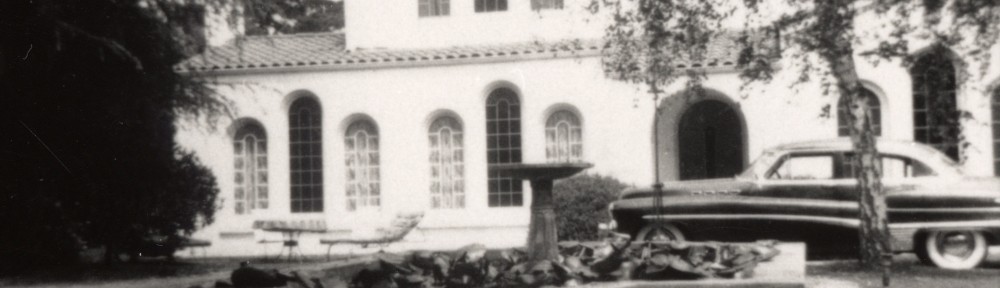
Schönberg completed the work during July and early August 1908 while staying in Preslgütl (right), a waterside farmhouse in the stunning lakeside resort of Gmunden that he had rented for his family’s summer vacation. Here, on the eastern banks of the Traunsee, he had been joined by his studenst and friends, including Gerstl. However, a couple of weeks after Schönberg had completed the composition, Gerstl and Mathilde were discovered in flagrante delicto, possibly in Gerstl’s own holiday farmhouse. Shocked by his wife’s betrayal, Schönberg summarily rejected her pleas, upon which the two lovers fled from Gmunden back to Vienna.

It is, perhaps, unsurprising that this juxtaposition of events should have prompted a raft of scholarly musicological conjecture that has somewhat questionably concluded that not only had Schönberg represented his emotions regarding the affair in his Second String Quartet, but that Mathilde’s infidelity had acted as the catalyst for his historic leap to atonality. Such speculation, however, is firmly refuted by the timeline established within this research, which strongly indicates that, rather than events in Gmunden having had an influence on Schönberg’s startling musical development in his Second String Quartet, there may have been other powerful factors that caused him to write atonally for the first time.

Postscript: Nuria points out that the Seybert family were the parents of the photographer Lisette Model, who was a friend of Trudi Schönberg. Lisette studied music with Schoenberg in 1920-21. She later wrote, “If ever in my life I had one teacher and one great influence, it was Schönberg,”

Eddins Steps In It Again

Bill Eddins, the music director fo the Edmonton Symphony Orchestra, was pilloried on his own blog for his earlier post (It’s Schoenberg’s Fault!).  Undeterred, he posted a second blog (No One Expects the 12-Tone Inquisition!) now claiming that he was being attacked for challenging “orthodoxy” and attacking a “sacred cow” by suggesting that the music of Schoenberg, Berg and Webern was responsible for a supposed lack of interest in classical music among the general public.

The new blog is almost as incoherent as the first (and does not deal with my prior blog on the topic).  In the end, Eddins backtracks a bit from his original posting, even claiming that his title was just a tongue-in-cheek attempt to be provocative.

Of course, no one can blame Shoenberg [sic] for the current crisis in classical music, anymore than one can blame Queen Elizabeth II for the fact that no British born man has won Wimbledon since 1936. . . . But that was never the point of my post, and it is very, very interesting that this was understood immediately in the social media world yet almost completely mistaken on the “serious” side.  The point was, and is, that there are way too many sacred cows in this business. Orthodoxy is very, very bad for religion, nationalism, and art.

Oh, sorry we misunderstood.

Eddins’ main problem is that he’s just not smart enough.  Sorry, that’s the real sacred cow.  It’s a truism that the smarter people are, the more they are able to appreciate new and difficult music (or new and difficult anything).  And people who aren’t that smart, generally don’t like smart people telling them that they aren’t smart.

Apparently it is ok for someone like Eddins to denigrate the entire output of a composer like Schoenberg, but it is not ok for someone to challenge Eddins’ opinion and point out the logical errors in his argument.  So, for example, Eddins takes issue with those who pointed out that his repetition of the myth that “In the width and breadth of this mighty land the universities and colleges during this era were the bastions of the Dodecaphonists” was simply not true, according to the recent statistical study by Joseph Straus (The Myth of Serial “Tyranny” in the 1950s and 1960s).  The comprehensive study can be ignored, apparently, because Eddins himself once witnessed a member of a faculty at the school he attended “deriding” a student for writing a melody.  “It was depressing in the extreme,” he writes.  No doubt.  No one likes being told by an authority that they aren’t talented or smart enough.  And the standard defense is to challenge the authority as “elitist,” as if that epithet can explain away the pupil’s deficiencies.

Here’s his new explanation of why Eddins thinks people don’t like classical music:

However, I can’t count how many times I have gotten into a conversation with someone who no longer attends classical music concerts because they were made to feel uncomfortable expressing a negative opinion about the music they were listening to.  Because they didn’t like what they heard, and they happened to not be “experts” on music, their feelings were denigrated.  Herein lies the worse aspect of orthodoxy – the inability to understand or give creedence to an opposing point of view without denigrating it with attacks or arguments of a condescendingly personal nature.

According to Eddins, music is a “very personal choice” that apparently has nothing to do with training, education and innate intelligence.  So, I suppose it is perfectly appropriate for someone who lacks all three qualities to denigrate a piece of music, or even a composer’s entire output. Not only appropriate, but the lay critic can then be offended if someone with more training, education and intelligence challenges his opinion.  Imagine if this were true in physics, and Mr. and Mrs. Average could say “I just don’t like relativity and that whole quantum physics thing.  Newtonian physics was better.  Down with the ‘sacred cow’ of new science. If only scientists would stop talking about the Higgs Boson, I would pay attention to science again.”  And if anyone dared to point out the problems with Mr. Average’s views, he would say

It doesn’t mean that the [science] we dislike is evil, but rather it is not for us. It also doesn’t mean that the [science] we like is good.  However, I can’t count how many times I have gotten into a conversation with someone who no longer attends [science lectures] because they were made to feel uncomfortable expressing a negative opinion about the [science] they were listening to.  Because they didn’t like what they heard, and they happened to not be “experts” on [science], their feelings were denigrated.  Herein lies the worse aspect of orthodoxy – the inability to understand or give creedence to an opposing point of view without denigrating it with attacks or arguments of a condescendingly personal nature.

Mr. Eddins, we all “understand” your point of view.  You have an inferiority complex. Sorry if that’s a personal argument.  Sort of like blaming your own inability to connect with audiences on my grandfather is personal.

No, Mr. Eddins, it’s YOUR fault!

The latest in a 100-year effort to scare people away from the music of Arnold Schoenberg is a blog by Bill Eddins, It’s Schoenberg’s Fault!

I did an interview with a reporter from Minnesota Public Radio yesterday exploring the difficulties being faced by the Minnesota Orchestra and the St. Paul Chamber Orchestra.  After a thorough dissection of the mistakes that led up to this current mess with both orchestras, and much of the classical music industry thereto, I have come to one undeniable conclusion – it’s Schoenberg’s fault.

His theory is that ordinary people will not listen to ANY classical music, because orchestras sometimes program works by Schoenberg, Berg and Webern. Ok. That’s one theory. But I have another.

I suppose it is possible that Mr. and Mrs. Joe and Josephine Average (as Eddins calls them) discuss whether or not to go to a classical music concert, and Mr. Average says to his wife, “You know, honey, I’ve heard Schoenberg’s Three Pieces for Chamber Orchestra and I just don’t like it.  So let’s not go to the concert tonight (whatever they are playing).  I just don’t want to listen to any classical music ever again.” But I think there is a more likely scenario.

Mr. and Mrs. Average are prejudiced.  They have probably never heard a note of music by Schoenberg, Berg or Webern and certainly could not tell the difference between their music and that of Stravinsky, Bartok or Ives, about which Eddins writes that “people are excited to hear it” and “jump to their feet.”

What sends the audience away is not the music, it’s the hype.  It is prejudice. Literally, people have been taught by Mr. Eddins and others to pre-judge the music before they even listen to a note of it. They see the name on the program, figure they won’t like the music because they’ve heard that it’s hard to like, and stay away. Eddins is a purveyor of hatred and prejudice.

I am not suggesting that every person will love every note of Schoenberg’s music. It is often not easy, especially on a first listening. But, as Eddins points out, audiences often love difficult music. They just have to know that it’s ok to like it. Honestly, is it Schoenberg’s fault that people like Eddins write articles and give interviews suggesting that if an orchestra programs Verklaerte Nacht, Pelleas und Melisande, Gurrelieder, Monn Cello Concerto, Theme and Variations or Suite for String Orchestra, or even the Brahms or Bach orchestrations, that “subscription renewals drop like a paralyzed falcon”?  Do Mr. and Mrs. Average really appreciate Stravinsky’s Le Sacre de Printemps and Bartok’s Concerto for Orchestra more than Schoenberg’s Chamber Symphonies One and Two?

Ah, Eddins might say, you are not mentioning the more difficult works like Five Pieces for Orchestra or the twelve-tone Variations for Orchestra, Violin Concerto or Piano Concerto.  But that’s the whole point.  Eddins doesn’t differentiate those works in his post either.  He writes, about all of it, “this music does not seem to speak to most people’s souls.”  Really?  All of it?

The real problem is that audiences have been prejudiced against ALL music by Schoenberg, as if they are required to like and appreciate every note.  It is an impossible standard, especially for the “average” music-lover who only wants a certain type of music (one that he is familiar with). Do Mr. and Mrs. Average need to avoid Petrouschka because they won’t like the Requiem Canticles?

Schoenberg goes in many other directions (as do Stravinsky, Bartok and Ives), and that puts some people off.  As Schoenberg explained in his brief note:

My music is supposedly not emotional.
Of course, it is not: “Oh, darling! You are so wonderful; I love you so much.”
There are also other kinds of love, for instance Alberich’s, Monostaten’s, Don Juan’s but also Petrarca’s (not expecting early reward).
There are also different kinds of emotion.
There is jealousy, hatred, enthusiasm.
There is love of ideals, of virtues, of one’s country, town or village and its inhabitants.
There is not only joy,
There is also sadness, mourning, pity and envy.
There is also anger;
There is contempt, pride, devotion, madness, fear, panic, courage, admiration.
Love of justice, of honesty, of good manners.
Love of good food and drinks and of the beauty of nature; of animals, flowers and exotic stones.
Love of a bird’s song and of competitive games.

No need for Schoenberg to apologize.  It really is not his fault. Eddins and his ilk, preaching prejudice to the uninformed, are what is hurting classical music.

100 Years of Pierrot Lunaire

This year marks the 100th anniversary of Schoenberg’s Pierrot Lunaire, op. 21.  Predictably, there have been a number of performances and fine articles, such as this one by Joseph Auner in the Boston Globe.  The work was composed between March 12 and July 9, 1912 and the first performance took place on October 9, 1912 in Berlin with the actress Albertine Zehme, who inspired the piece, as the first interpreter of the role.  There are many fine websites discussing the work.  See, for example, Todd Tarantino. You can also listen to many interpretations on youtube, including this old recording conducted by the composer.

Of course, the 100-year-hoopla is already starting for Stravinsky’s Rite of Spring, which was premiered in Paris on May 29, 1913.  It would be interesting to see a study of the comparative reception of these two landmark works.  One unexplored avenue, I think, is how the premiere of Stravinsky’s work became known as “one of the most famous classical music riots in history.”  It actually was preceded by the infamous Skandalkonzert of March 31, 1913, where Schoenberg conducted works by Webern, Zemlinsky, Schoenberg and Berg in the Great Hall of the Vienna Musikverein.  The concert was supposed to conclude with a song from Mahler’s Kindertotenlieder, but the rioting during Berg’s Altenberglieder ended the concert.  People actually rushed the stage to assault Schoenberg as he conducted.  Wikipedia has a page on classical music riots that does not even mention the Skandalkonzert.  The Vienna riot was reported widely, also in Paris, and must have influenced the audience reaction to Stravinsky’s ballet.  But I have never seen anyone really explore that connection.


Schönberg Center Summer Academy

The Arnold Schönberg Center in Vienna hosts a Summer Academy for students, organized by  Severine Neff.  Megen Eagen of the University of North Carolina at Chapel Hill posted a nice blog about her experience.  One of the goals of the Center is to promote scholarship, and these seminars are a great way to introduce students to the Schoenberg archives.  Some can then go on to apply for a research grant sponsored by the Avenir Foundation.

Summer vacation update

We’ve been traveling for almost a week now — from Las Vegas to Zion to Bryce and now Park City. A great trip so far, with memorable hikes and incredible sights. I had not been on this route since our family trip in 1976.

I was impressed with the drive to Las Vegas, which was nicer than I expected. The groves of yucca trees were spectacular. The outside temp reached 112 degrees as we passed through Baker, California — probably the hottest place on earth at that moment (or second to Death Valley to the north) because the sun was already down on all the other world hot spots on the other side of the globe.

We stayed at the Four Seasons, which is really just the top 5 floors of the Mandalay Bay, a hotel right at the beginning of the famous Las Vegas strip. On arrival we wet out to the water park outside. Joey was crushed to learn that he was not yet tall enough to go into the wave pool. Eventually, all the kids went into the Lazy River and had a blast. We then segued to the Four Season’s pool and ordered food form the restaurant so we could eat by the pool outside.

After the kids and Pam went to sleep, I snuck down to the casino. It was intimidating at first. The last time I was at a casino was in 1991 on my post bar exam trip when I quickly lost $40 in Monet Carlo. This time I gave myself $500 to lose. It took a while, but I wandered around and found the poker tables. I was shown to a seat at a table and bought $300 in chips. A nice guy next to me helped me get comfortable with some of the rules, which were not too different than the ones at our friendly neighborhood poker game. I had lousy cards for the first several times around the table, and so either did not play, or played and lost, until I was down about $200. I bought another $200 in chips to give me enough to play with, and spent the rest of the night clawing my way back. When I left the tables at 12:30, I was down $64, which included giving about $10 in tips. So not too bad for my first time playing poker in Las Vegas.

On Monday we left Las Vegas, gawking at all the crazy hotels on the strip, and headed to Zion National Park. I didn’t remember much from our trip to Zion in 1976, when I was 9 years old. Mainly just the Weeping Rock and being not so impressed. This time the canyon was more memorable. The red cliffs on both sides change colors throughout the day. Maybe we did not stay long enough last time. But we had two nights this time, so a full day to really appreciate the dramatic scenery. Rather than the Weeping Rock, we decided to hike the Riverside Walk to the Narrows.

The starting point is the end of the tram line. Droves of people do this short hike, and many then continue on into the Narrows, as the canyon walls move in and you are forced to wade up the river. Pam didn’t want to get her shoes wet, but the kids and I waded across twice so we could go up a little bit. I am sure the kids will remember this hike and Zion.

On Wednesday we went to Bryce Canyon, which I did remember loving as a kid. But maybe it was just the adventure of having out brand new Buick Century station wagon break down, and getting to ride with my dad in the tow truck for 100 miles to the nearest place that could fix it. (I still remember the chili cheese dog I had while we waited for the car to be fixed.) This time our rented black Suburban didn’t have any problems. By the way, speaking of eating, on the way from Bryce to Zion we stopped for lunch at the Adobe Cafe in Hatch (any relation to the Senator?) and everyone loved the food (which doesn’t happen often when we’re on the road). Anyway, Bryce Canyon is just as amazing as I remembered. Pictures just cannot do it justice. We stayed, as in Zion, in the park Lodge in old cabins with two connecting rooms.

On Thursday, we hiked down into the canyon. Every person we met at the Lodge gave us advice on which direction to go. Problem was, they gave the opposite advice. One said to go clockwise; the next counterclockwise. So I chose to go clockwise, starting with the walk down to the Queen’s Garden from Sunrise Point.  The hike down from there is less steep and so we enjoyed the gradual descent into the canyon.  After resting in the Queen’s Garden, we headed on toward the very steep climb up to Sunset Point.  But while we were still going down, Joey had a sit-down strike and I was worried we’d never make it back out.  I finally was able to get him out of his funk by asking what he would do to survive if we stayed down there overnight (which was what he had decided he wanted to do, rather than go up).  He then regaled me with survival tactics he had learned in repeated viewings of Alvin and the Chipmunks — Chipwrecked, including using his glasses to start a fire.  That got him going and by the end he very literally beat me to the top of the rim of the canyon.

Yesterday, we drove from Bryce up to Park City.  A big fire south of Salt Lake City made everything all smoggy, even up to Park City.  I had been here for skiing around 1979 or 1980, but did not remember anything about the town, which is really charming.  We’re staying in a nice condominium at the bottom of Main Street.  Dora and I walked up to the top and then stopped for ice cream at Java Cow on the way down.  There’s some big Republican get-together with presidential candidate Mitt Romney, so we’re probably the only democrats in town.  I wonder if they all know that there’s no chance he can win?

Today Pam and the kids want an easy rest day.  With the smoke from the fires, it doesn’t make sense to go hiking anyway.  Tomorrow we head to Yellowstone, my first time.

Hilary Hahn wants your “tone rows”

The violinist Hilary Hahn posted a video asking people to submit “tone rows” for some as yet unrevealed purpose related to her Encores Contest, ending June 15.  I am using her announcement to experiment with embedding a video on this blog.

I wonder if she will want an all-interval twelve-tone row.  I wrote my Princeton thesis in 1988 on some attempts to classify those.  Wikipedia says “There are 3,856 distinct all-interval twelve-tone rows.”  (A row is not distinct if it is just a transposition up or down of another row, so for each of these there are actually 11 others.)  In fact, if you remove the inversions, you get 1,928, a finding of Stefan Bauer-Mengelberg and Malvin Ferentz from 1965.  In my thesis I described several further operations that allowed me to reduce the number of distinct all-interval twelve-tone row generators to just 286.  The total number of all-interval 12-tone rows is 46,272 and the total number of twelve-tone rows of any type is 12! or 479,001,600.

Arnold Schoenberg is expecting a ggg-grandson

Latest from the Greissle side of the family tree: Karen Burberry’s daughter Jennifer is expecting a baby boy.  (Karen is the daughter of Hermann Greissle, the son of Trude Greissle (Schönberg).) I think he will be the first ggg-grandchild of Arnold Schoenberg.  We’ll have to wait until our kids become grandparents for that to happen on our side of the family.